
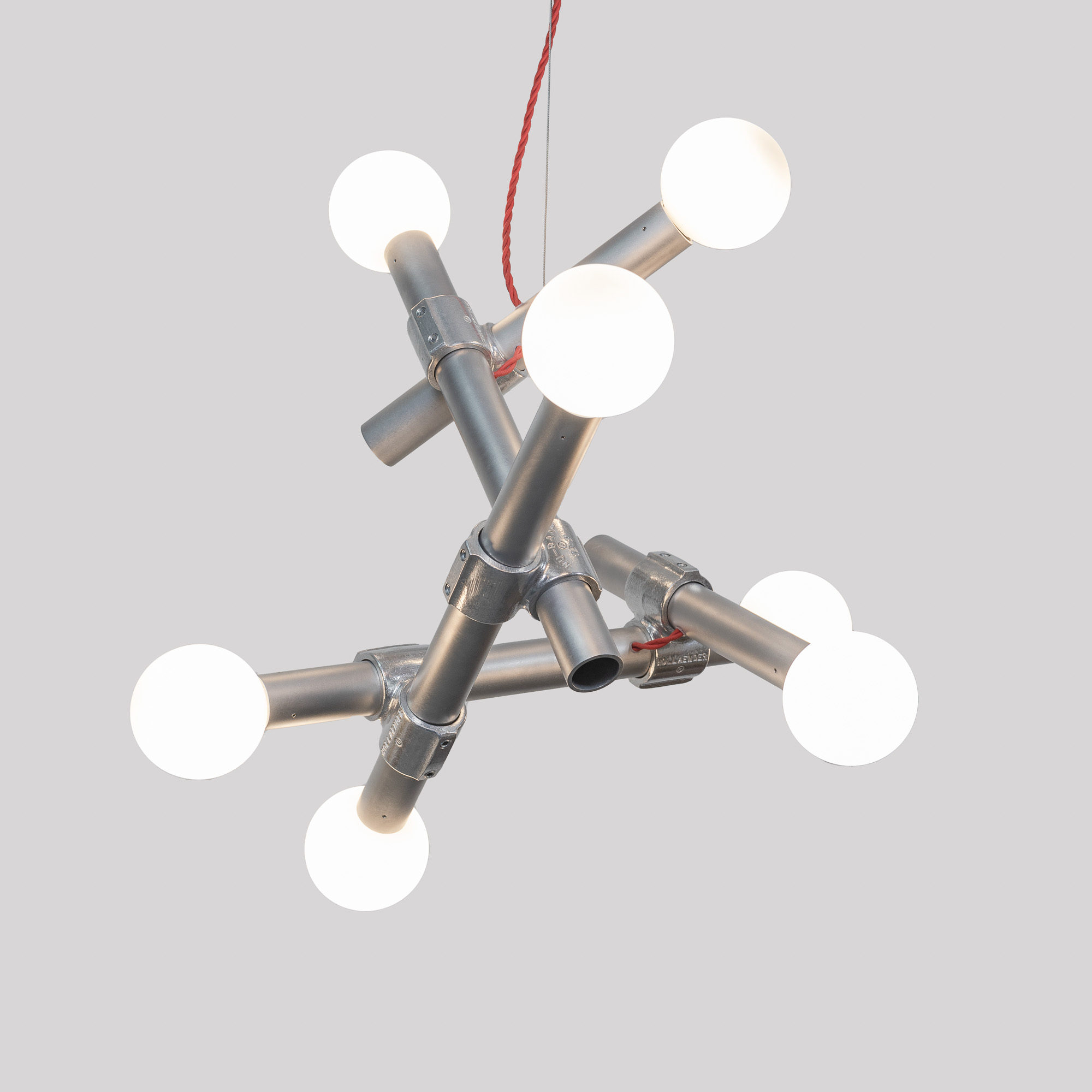
A chandelier is a ceiling mounted light fixture that hangs into a room and spreads light from several sources at once. Instead of hiding against the ceiling, it sits right in the space, doing its job while also shaping how the room feels.
Most chandeliers are built around a central structure with multiple lights branching outward. Sometimes those lights extend along arms. Sometimes they follow a more geometric frame. Either way, the idea is similar. The light moves outward across the room rather than pointing in just one direction.
That structure is what sets chandeliers apart from other ceiling lights. Pendant lights usually feature a single bulb that drops down from a cord or rod. Flush mount lights stay tight to the ceiling and keep things simple. Recessed lights disappear into the ceiling entirely. Chandeliers take the opposite approach. They are meant to be part of the room.
Because of that presence, chandeliers tend to show up where a little structure overhead makes sense. Dining rooms are the classic example. Hang a chandelier above the table and the whole area suddenly feels grounded. The table becomes the center of the room without anyone really thinking about why.
Entryways and foyers work well too, especially when the ceiling has some height. A chandelier suspended in that open space helps define the room and gives the eye somewhere to land when you walk in.
You will also see chandeliers in living rooms with taller ceilings, or in stairwells where the fixture fills a vertical space that would otherwise feel empty.
At its core, a chandelier is simply a multi light fixture hanging from the ceiling. But when it is sized well and placed in the right spot, it does a little more than brighten the room. It gives the space a center.