
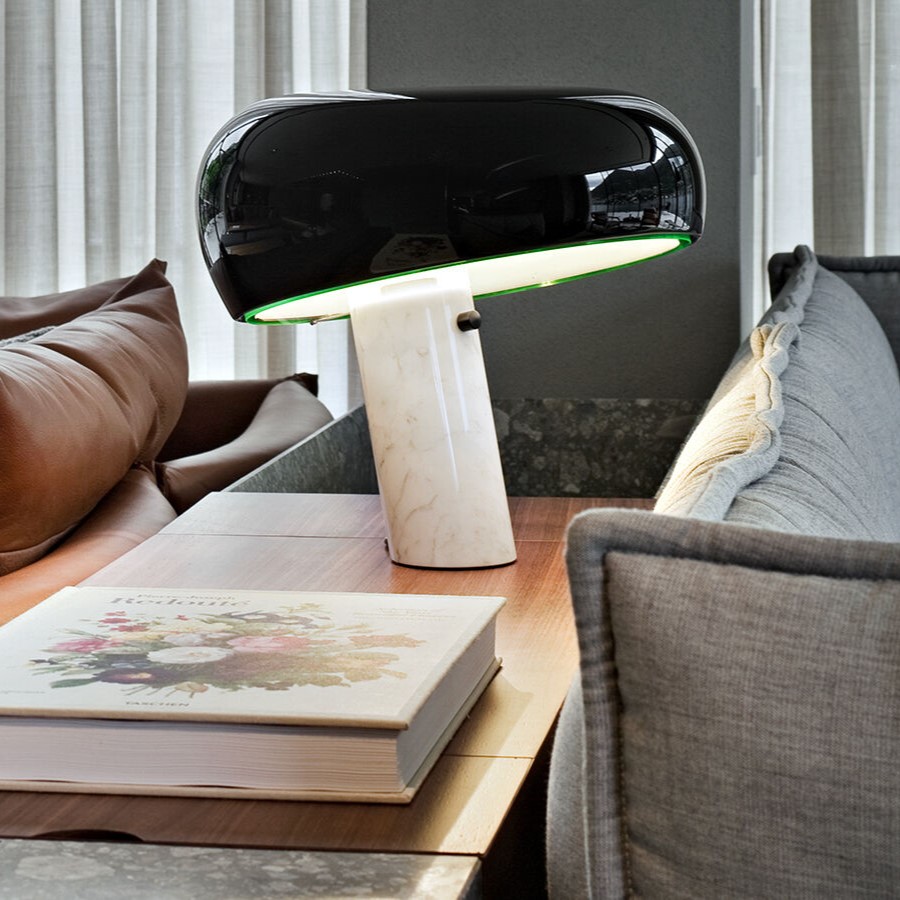
Table lamps are convenient. You plug them in, set them down, and you have light. But they are not always the cleanest or most efficient option in a room.
The biggest drawback is the space they take up. A lamp base can claim a good portion of a nightstand or side table. In smaller bedrooms or living rooms, that surface area matters. If you need room for books, a phone, or just a clear tabletop, the lamp can start to feel like it is in the way.
Cords are another common frustration. Unless you have a floor outlet in exactly the right spot, the cord usually runs down the wall and across the floor. Even when tucked neatly behind furniture, it adds visual noise. In tighter spaces, it can also become something to step around.
Table lamps also tend to create pockets of light instead of evenly filling a room. That can be great for reading, but if they are your only light source, the rest of the space may feel dim. You often end up turning on overhead lighting anyway.
The height of the light source can change how a room feels. Because table lamps sit lower, shadows fall differently than they would with ceiling or wall mounted fixtures. Sometimes that makes a room feel cozy. Other times it just makes it feel smaller.
Table lamps are flexible and easy, but they are not always the most streamlined solution.