
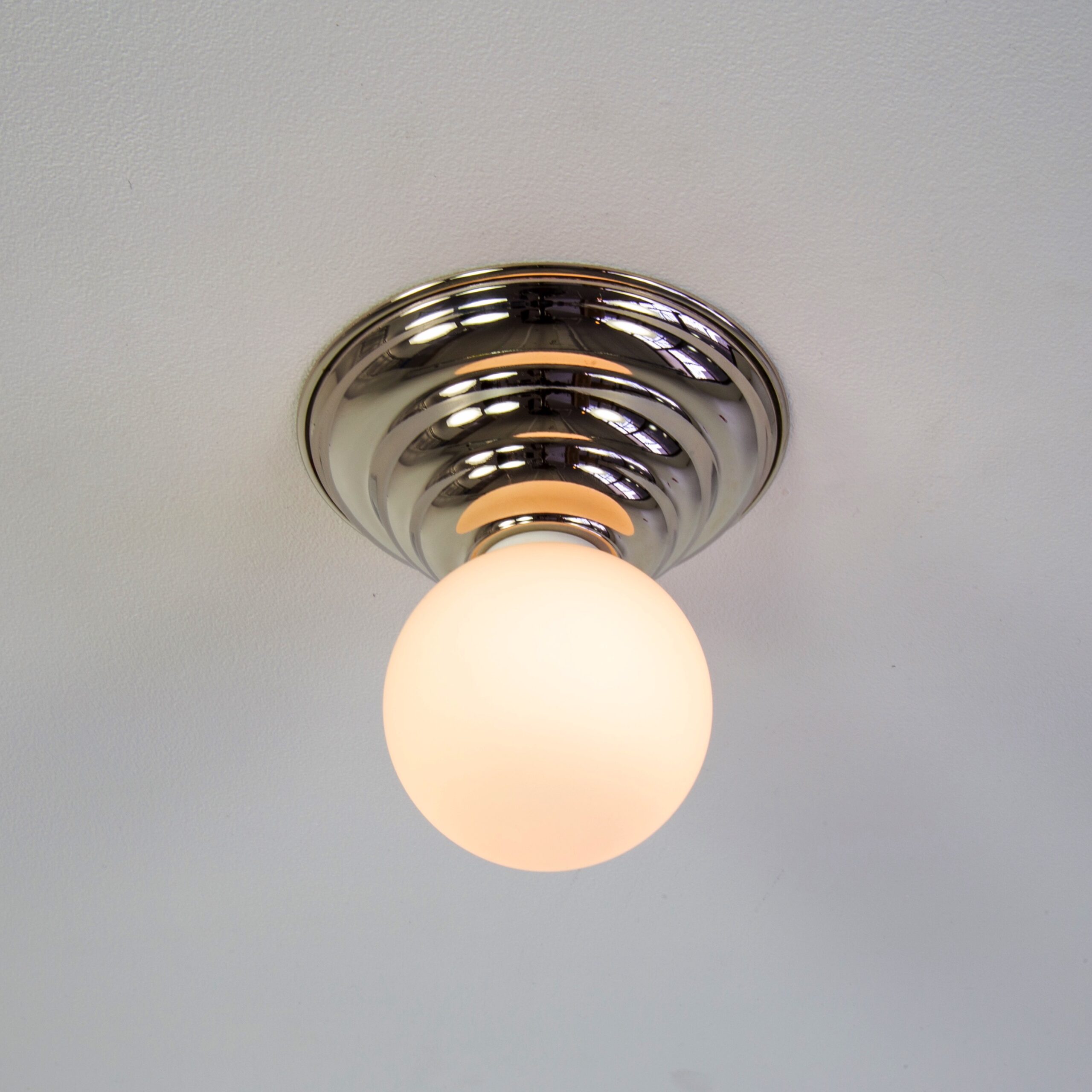
At 100 lumens, we are talking about a very small amount of light. This is not something you install in the middle of your living room and expect it to brighten the whole space. It is closer to a night light than a main fixture.
If you are wondering how 100 lumens compares to watts, and whether it is bright enough for anything useful, here is what that number really means in everyday terms.
How to Measure Brightness
Lumens measure brightness. The higher the number, the more light you will actually see in the room. A bulb rated at 100 lumens gives off a fraction of the light you would get from a typical household bulb.
Watts measure how much electricity the bulb uses. Years ago, wattage also hinted at brightness because incandescent bulbs needed more power to produce more light. That is no longer true with LEDs. You can now get small or large amounts of brightness while using very little electricity.
So when you look at a package, lumens tell you how bright it will feel. Watts tell you how much energy it will use.
How Many Watts is 100 Lumens? What is 100 Lumens in Watts?
There is no perfect formula, but there are good comparisons.
An old incandescent bulb that produced around 100 lumens used about 15 watts.
A CFL at that brightness might use roughly 3 to 5 watts.
An LED that produces 100 lumens usually uses only 1 to 2 watts.
If you are replacing a small 15 watt incandescent bulb, look for an LED labeled around 100 lumens. You will get the same low level of light while using far less power.
How Bright is 100 Lumens? Is 100 Lumens Bright Enough?
In simple terms, 100 lumens is dim. You would not use it to light a bedroom, kitchen, or office. It is not bright enough for reading or doing detailed tasks.
Where 100 lumens makes sense is in small, specific situations. Night lights are often in this range. So are small decorative bulbs meant to add a soft glow to a shelf, stairway, or hallway. In a dark room, 100 lumens is noticeable. It gives you just enough visibility to move around without turning on a full overhead light.
If you tried to rely on 100 lumens as your only light source in a normal sized room, it would feel underpowered. But as accent lighting or a gentle guide at night, it does exactly what it is supposed to do.
What’s It Actually Good For?
If you are replacing a 15 watt incandescent bulb, 100 lumens is the number to keep in mind. It delivers the same low brightness while using very little electricity with LED.
Think of 100 lumens as background light. It is there to guide you, not to flood the room. Used in the right spot, that soft touch can be surprisingly useful.